
SEO & AEO
Why Your SEO Rankings Are Dropping
Rankings dropped? Check tracking, indexing, site changes, competition, content decay, technical issues, intent shifts and search-result changes before reacting.

Do Not Start by Changing Everything
A ranking drop is a symptom, not a diagnosis.
The first job is to confirm what actually fell: one keyword, one page, one topic, one country, mobile traffic, all non-branded clicks, or the whole site. Search results also change in appearance, so clicks can decline even when average positions appear similar.
Make a timeline, then investigate.
1. Confirm the Data
Check Google Search Console before relying on a third-party rank tracker. Compare clicks, impressions, average position and affected pages/queries over the same time period.
Segment branded and non-branded queries. A brand-demand decline is different from a loss of generic rankings.
Also check analytics implementation. A GA4 or tag change can create an apparent traffic crash while Search Console impressions remain stable.

2. Check Indexing and Crawlability
Look for accidental noindex tags, robots.txt changes, canonical errors, redirect mistakes, server issues or important pages that disappeared after a deployment.
Inspect representative URLs in Search Console. Review sitemap status and crawl patterns. For large sites, check whether faceted URLs, parameters or duplicate pages are consuming crawl attention.
A technical loss often begins immediately after a release or migration.
3. Review Recent Website Changes
Ask what changed in the weeks before the decline.
Common causes include URL changes without redirects, navigation changes, removing internal links, rewriting high-performing pages, JavaScript rendering changes, switching CMS, template changes, deleting sections or moving content behind interactions.
SEO should be part of release review for any substantial website change.
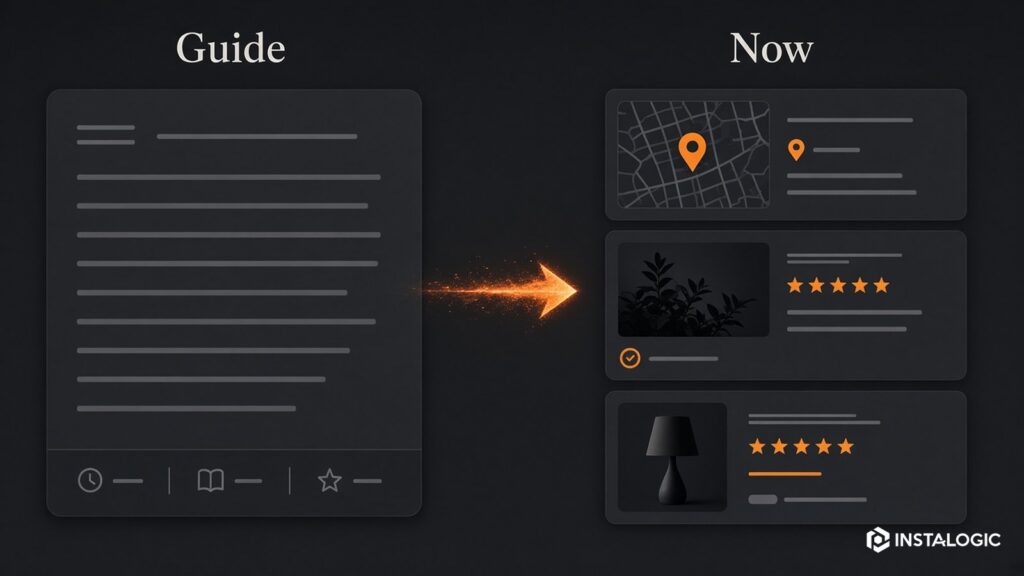
4. Look for Search Intent Changes
A page can become less relevant even when nothing on your site changes.
Google may start favoring product pages instead of guides, local results instead of national pages, or fresh news/comparison content instead of evergreen definitions.
Review the current results for the affected queries. The type of page ranking now can reveal a shift in what the search engine believes users want.
5. Check Competitor Improvement
Rankings are relative. Your page can stay the same and still fall because competing pages became more useful, better linked, fresher or more aligned with intent.
Compare structure, evidence, media, depth and unique value - not word count.
If every competitor now includes original data, examples and comparison tables while your page is a generic 2022 article, the gap is content quality, not a mysterious penalty.
6. Content Can Decay
Prices, screenshots, product features, statistics and recommendations become stale. Broken outbound links and obsolete examples reduce usefulness.
Refresh content when the underlying information changes. Do not change publication dates without meaningful updates.
Consolidate overlapping pages when several weak articles compete for the same intent.
7. Search Results Themselves Are Changing
AI Overviews, AI Mode, video, image results, local packs and other SERP features can alter click behavior.
A site can retain reasonable visibility while receiving fewer clicks because users get more information directly in the results.
That makes brand authority, distinctive content, visuals and strong commercial pages increasingly important. Google's current guidance still emphasizes core SEO fundamentals for generative features.
8. Avoid Panic Tactics
Do not buy hundreds of links, rewrite every title or publish dozens of AI articles because a graph fell for one week.
Identify the affected segment and likely cause. Fix technical issues first. Then restore relevance, strengthen content, improve internal links and monitor.
SEO recovery is a diagnosis problem before it is a production problem.
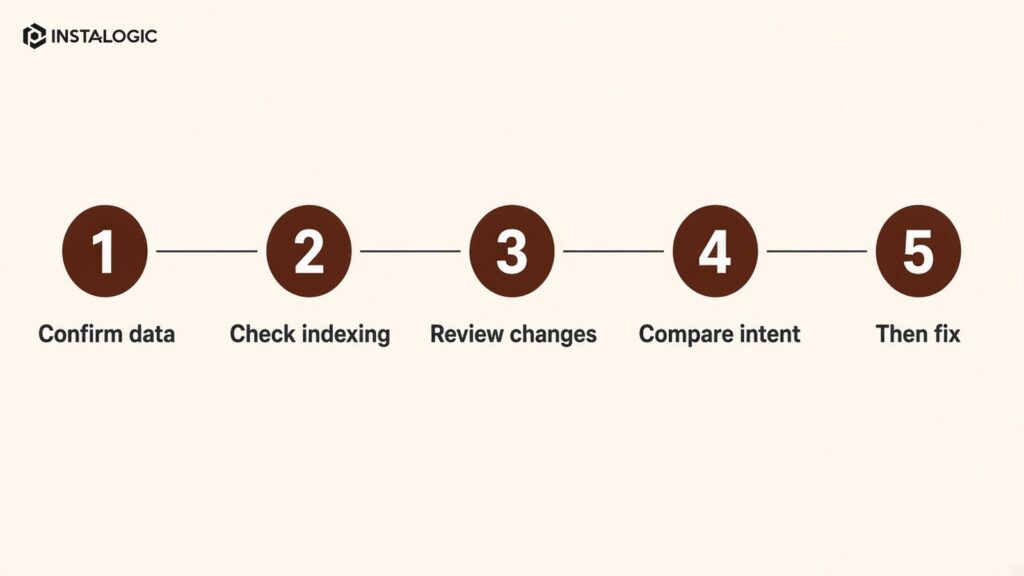
A Recovery Checklist
- Confirm Search Console data and timeframe.
- Identify affected pages, queries and devices/markets.
- Review releases, migrations and CMS/template changes.
- Inspect indexing, canonicals, redirects and server errors.
- Compare current SERP intent and competitors.
- Refresh or consolidate stale/overlapping content.
- Review internal links and important page discoverability.
- Measure recovery by impressions, relevant positions, clicks and conversions.
Avoid changing ten variables on the same page at once. If possible, document what changed and when. Recovery is easier to understand when edits are controlled.
Next restore intent and information value. Compare affected pages with current results and determine whether the page type, depth or evidence is now weak. Then improve internal linking and authority where justified.
Fix severe technical issues first: accidental noindex, broken canonicals, redirect chains, server errors, blocked resources or deleted high-value pages. Those problems can prevent search systems from using otherwise excellent content.
Recovery Work Should Be Prioritized by Risk
Do not confuse correlation with proof, but use the timeline to prioritize tests. SEO diagnosis becomes faster when the team has a disciplined release log instead of trying to remember what changed.
Overlay Search Console data by page group. If the decline begins immediately after a migration and affects only URLs that changed, investigate migration mechanics first. If several unrelated sites in the industry move at the same time and the SERP composition changes, the cause may be broader.
Create a simple timeline covering four to eight weeks around the decline. Mark deployments, content changes, redirect updates, hosting/CDN changes, manual actions or security incidents, major competitor launches and known Google updates.
How to Use a Timeline to Find the Cause
What to Monitor After an SEO Recovery
Once a suspected issue is fixed, create a recovery dashboard that focuses on the affected segment rather than the whole site. Track index status, impressions, clicks, average positions, priority pages and conversions. If the problem involved a migration, also monitor 404s, redirect behavior and crawling of old versus new URLs.
Recovery rarely happens uniformly. Some queries may return quickly while others remain weak because competitors or search intent have changed. Compare groups: branded versus non-branded, service pages versus blog posts, mobile versus desktop, and major markets where relevant.
Document each major fix with a date. Search systems need time to recrawl and reevaluate pages, and several releases may overlap. A change log helps the team avoid attributing recovery to the most recent action simply because it is easiest to remember.
If visibility returns but conversions do not, do not declare the project complete. The ranking loss may have revealed a separate conversion or intent problem. SEO should ultimately restore useful demand, not only a chart.
When to Ask for Help
Bring in an experienced SEO or development team when the decline follows a migration, affects a large portion of revenue, involves complex JavaScript/indexing behavior or continues after obvious technical checks. The cost of experimenting blindly can exceed the cost of a structured diagnosis.
Prepare useful evidence before the review: Search Console exports, analytics timeline, deployment history, changed URLs, recent content edits and access to crawling/log tools where available. A consultant can work faster when the site history is documented.
Separate Ranking Loss From Demand Loss
Search demand can fall because of seasonality, economic conditions or changing terminology even when your rankings remain stable. Compare impressions as well as positions. If impressions fall across competitors and the market itself is quieter, the solution may be broader demand generation rather than an SEO recovery project.
Frequently Asked Questions
Does a ranking drop mean Google penalized my site?
Usually not. Drops can come from technical changes, competition, content relevance, algorithmic systems, SERP changes or seasonality. Investigate before assuming a manual penalty.
How long does SEO recovery take?
It depends on the cause. Technical fixes may be processed relatively quickly, while content/authority recovery can take longer.
Should I update every page after an algorithm update?
No. Change pages only when evidence shows a problem. Broad reactive rewrites can damage content that was already working.