
SEO & AEO
Why Local Businesses Don’t Rank on Google Maps
Learn why local businesses struggle in Google Maps: profile relevance, categories, location, reviews, website signals, inconsistent data and weak local authority.

Maps Visibility Is Not Controlled by One Setting
Businesses often treat Google Maps ranking as a profile-optimization checklist: add photos, choose categories and wait.
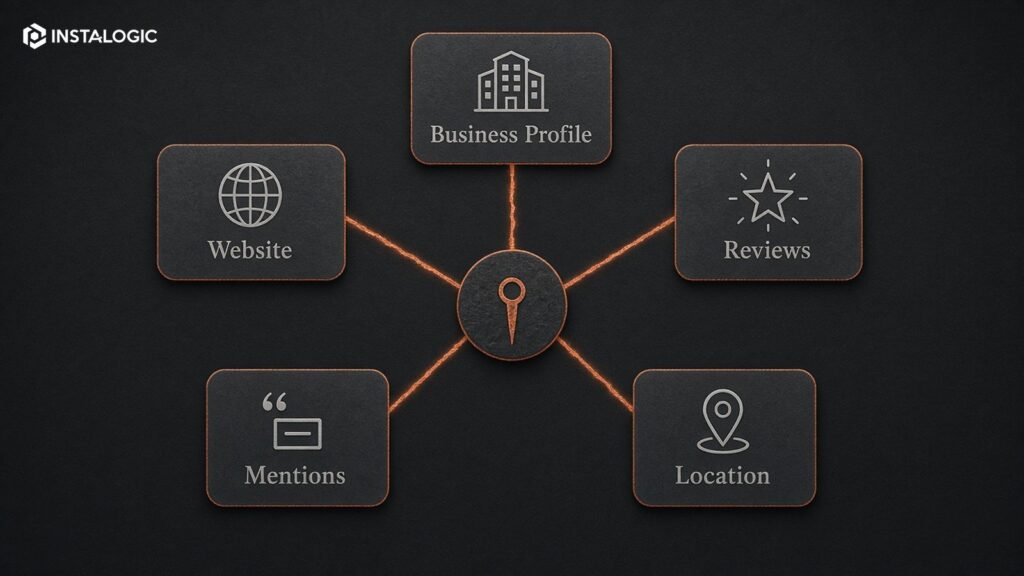
Those elements matter, but local visibility is broader. Google must understand what the business is, where it is relevant, whether information is accurate and how prominent/trustworthy the entity appears.
The website, reviews, local mentions and searcher's location all contribute to the context.
1. Your Business Profile Is Incomplete or Inaccurate
Use accurate primary and secondary categories, business name, address or service area, phone, website, hours and services.
Do not add keywords to the business name unless they are genuinely part of the real-world name. Do not create duplicate profiles for one location.
Keep holiday and special hours current. Small inconsistencies can create confusion for both users and search systems.
2. The Primary Category Is Wrong
Category choice strongly affects relevance.
Choose the category that best describes the main business, not the keyword with the highest volume. Use additional categories only for real services.
If competitors appear for a query and your business does not, compare category alignment before rewriting everything else.
3. Your Location or Service Area Is a Constraint
Local results are inherently geographic. A business can be excellent and still not rank equally across an entire city.
Track visibility from multiple points, not one desktop search at the office. Service-area businesses should also understand that setting a large service area does not guarantee high visibility everywhere within it.
Build genuine market relevance through useful location/service information rather than dozens of thin city pages.
4. Reviews Are Weak or Stale
Reviews influence buyer confidence and are part of local prominence.
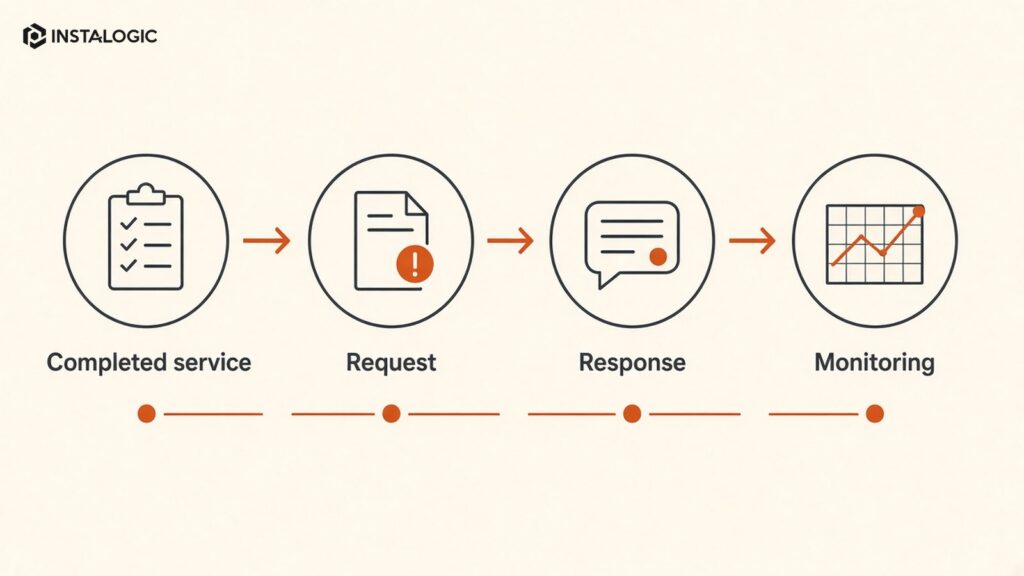
Build a consistent process to request reviews from real customers after meaningful interactions. Respond professionally. Do not buy reviews or create review-gating schemes.
Look at review quality as well as quantity. Specific reviews that naturally describe the service can be more useful to potential buyers than one-line ratings.
5. Your Website Does Not Support the Local Entity
The website should clearly show what the company does, its location/service area, contact information and relevant services.
Link the Business Profile to the most useful page, usually the main location or homepage depending on the business. For multi-location businesses, each real location should have its own useful page.
Local SEO cannot be outsourced entirely to Google Business Profile.
6. Local Authority Is Weak
Local links and mentions help establish prominence and context.
Relevant chambers, associations, partners, suppliers, events, local news, industry organizations and legitimate directories can all create useful signals.
Do not buy hundreds of generic citations simply to reach a quantity target. Accuracy and relevance matter more.
7. Competitors Are Simply Stronger
Review the local results objectively.
Do competitors have more complete profiles, stronger websites, better reviews, longer local history or more local mentions? Are you trying to rank for a service you barely mention?
The solution is not always one tweak. Local visibility can require sustained improvement across the entity and website.
A Practical Local SEO Plan
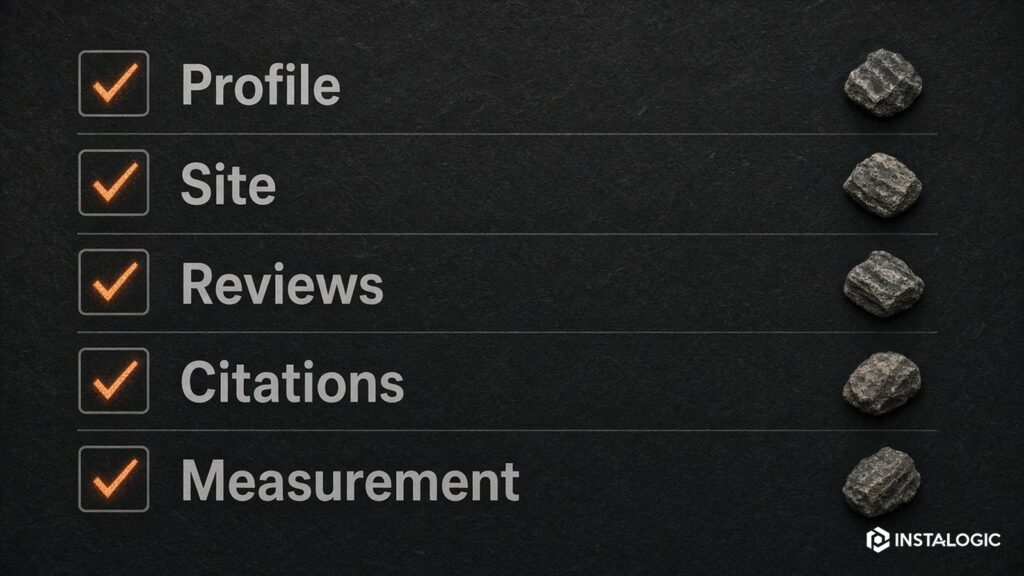
Fix profile accuracy first. Confirm categories. Strengthen service/location pages. Build a review process. Improve local links/mentions. Track visibility across the real service area. Measure calls, directions, website visits and leads - not only a single map rank.
Local SEO works best when the online entity reflects the real business clearly.
Track review velocity and quality over time, but remember that review acquisition is also a customer-experience process. Marketing cannot sustainably manufacture reputation that operations do not support.
Make the request simple and neutral. Do not ask only happy customers to review while filtering others away. Monitor new reviews and respond appropriately, especially when a complaint contains operational information the business should fix.
Do not run a one-time review campaign and then stop. Add review requests to a real customer-success moment: after a completed appointment, delivery, resolved support case or successful project milestone.
Reviews Need an Operating Process
Also test the website link on mobile. A strong profile that sends users to a slow or irrelevant page wastes the visibility it earns.
Then review the competitive results for several important searches from different parts of the service area. Note which categories, review patterns, websites and profile completeness the visible competitors have. The objective is not to copy them mechanically but to identify obvious gaps.
Review the profile as both a business owner and a customer. Confirm the real-world business name, primary category, additional categories, address or service area, phone, website, hours and services. Remove obsolete information and resolve duplicates.
How to Audit a Google Business Profile
How Multi-Location Businesses Should Manage Local SEO
Create one authoritative location record for each real branch. Maintain consistent name, address, phone, hours, categories and website destination across Google Business Profile and important directories. Give each location a useful page that reflects real services, staff, directions, local proof and contact options.
Centralize governance without making every location identical. Head office can control naming standards, templates, analytics and review policy, while local teams contribute photos, operational updates, community information and accurate hours. This balance protects consistency and local relevance.
Track performance by location. Calls, bookings, directions, website conversions and review growth can differ significantly even when the same marketing program is used. Location-level data helps identify operational issues as well as search issues.
When a branch closes or moves, manage the entity carefully rather than simply deleting pages and profiles. Redirect old URLs where appropriate, update directories and communicate the change. Local search depends on a coherent real-world entity, so operational changes should be part of the SEO process.
How Long Local SEO Takes
There is no fixed timeline. A newly opened business, a relocated branch and an established company with inaccurate information start from different positions. Competition and proximity also affect visibility in ways the business cannot fully control.
Judge progress through completed entity fixes, review growth, profile interactions, local landing-page traffic, calls and lead quality while tracking visibility across the service area. Avoid providers that guarantee a specific Maps position by a fixed date.
Local Visibility Is a Moving Target
Maps results can change by the searcher's exact location, device, query wording and time. Avoid judging performance from one manual search at the office. Use a consistent set of target queries and locations, then evaluate trends together with calls, bookings and other business actions.
Frequently Asked Questions
Why do I rank in one area but not another?
Local results depend partly on the searcher's location and geographic relevance. Visibility naturally varies across a city or service area.
Do more reviews guarantee higher Maps rankings?
No. Reviews are one part of local visibility and customer trust. Relevance, distance, website/entity strength and other signals also matter.
Should I create a page for every city near me?
Only if each page serves a real market and can contain useful distinct information. Avoid mass-produced near-duplicate city pages.