
Paid Advertising
SEO vs Google Ads: Which Is Better for Your Business?
Compare SEO and Google Ads by speed, cost, control, compounding value, data and business fit - and learn when using both makes sense.

The Short Answer
SEO and Google Ads solve different timing problems.
Google Ads can buy search visibility quickly when your campaign, targeting and landing page are ready. SEO builds organic visibility over time by improving the site's relevance, quality, technical accessibility and authority.
If you need demand now and can afford the acquisition cost, Google Ads may be the faster test. If valuable searches happen repeatedly and you want durable visibility, SEO deserves investment. Many businesses should use both, but not automatically and not at equal budget.
How Google Ads Works
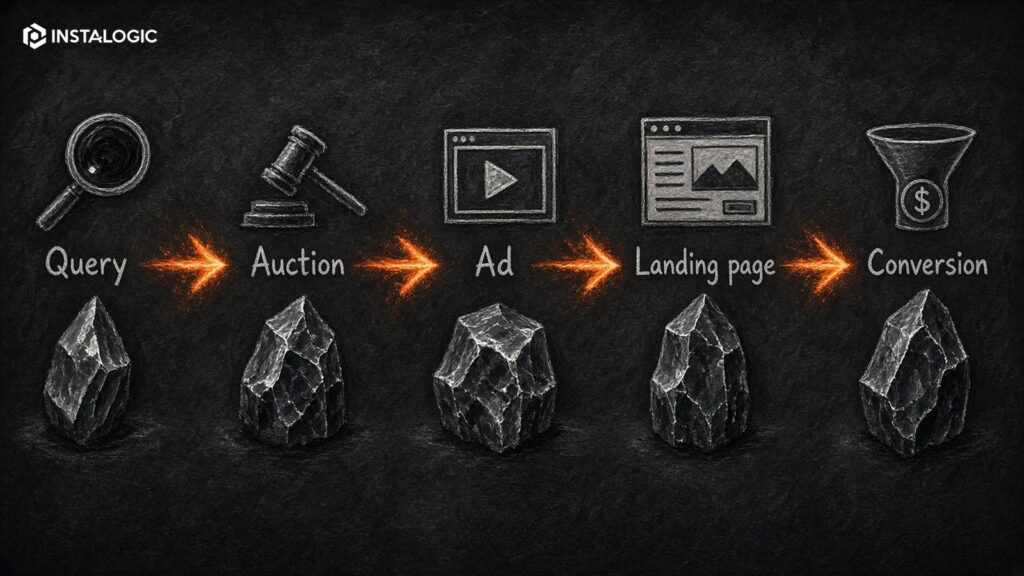
Google Ads lets advertisers compete to show paid results around relevant searches. The platform considers factors including targeting, bids and relevance. You control campaign settings, budget and much of the message.
The biggest advantage is speed. A campaign can begin collecting search and conversion data quickly. That makes Ads useful for a new offer, seasonal demand or a business that needs to validate which terms generate qualified leads.
The limitation is economic. When you stop funding the campaign, paid visibility stops. If conversion tracking or landing pages are weak, you can buy a large amount of unproductive traffic.
How SEO Works
SEO improves the likelihood that pages are discovered and selected in organic search. It includes technical accessibility, page relevance, internal linking, useful content, local signals where relevant and broader authority.
SEO is slower because you are not purchasing placement. Search systems need to crawl, understand and evaluate the site while competitors continue improving.
The advantage is compounding value. A useful page can continue earning visibility across many related queries after the initial work, although rankings are never permanent and maintenance still matters.
SEO vs Google Ads: Side-by-Side
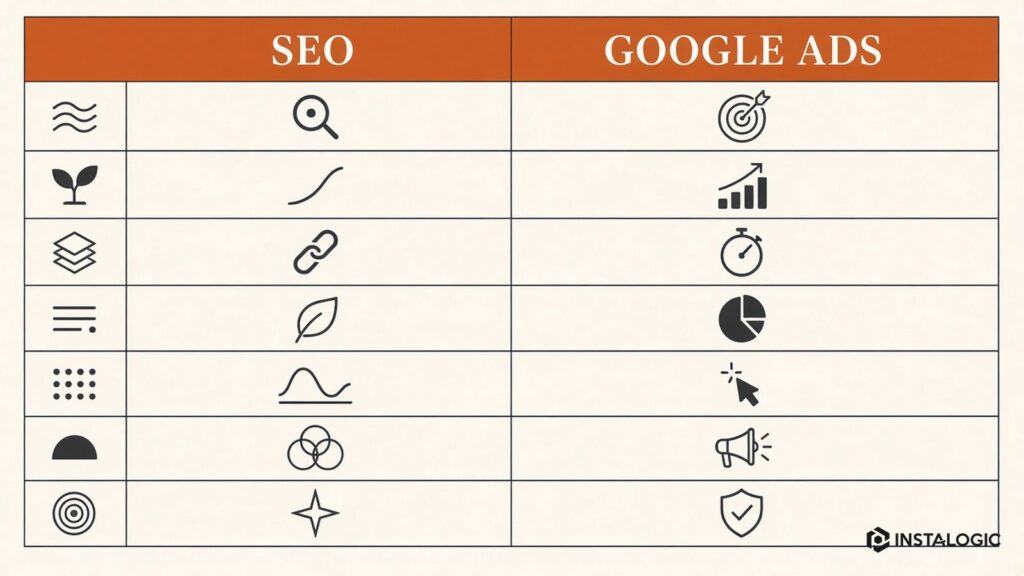
- Speed: Google Ads usually wins. SEO needs time to build and be evaluated.
- Control: Ads gives more direct control over targeting, budget and ad copy. SEO depends on search systems and cannot guarantee placement.
- Cost structure: Ads charges for media plus management/creative. SEO pays for optimization, content, technical work and authority rather than each click.
- Compounding value: SEO can continue generating organic discovery from work completed earlier. Paid visibility generally stops with spend.
- Testing: Ads can test keyword/offer demand quickly. SEO can use those insights to prioritize long-term content.
- Trust and SERP coverage: Organic and paid results appear differently. Having both can increase total search presence for important queries.
- Data: Ads can produce fast query/conversion data. SEO data is often slower and more affected by ranking/CTR changes.
When Google Ads Is the Better First Move
Choose Ads first when you have a strong offer, clear margins, a conversion-ready landing page and a need for fast market feedback.
It also makes sense when the SEO opportunity is highly competitive and the business cannot wait several months to test demand.
But do not scale spend until conversion tracking works. If you cannot distinguish qualified leads from spam or poor-fit enquiries, more ad spend only accelerates uncertainty.
When SEO Is the Better First Move
Choose SEO first when high-intent searches happen consistently, the website has meaningful content gaps, and the business can invest over a longer horizon.
SEO is especially valuable when buyers research many questions before contacting sales. Service pages, comparison pages, guides, case studies and industry content can all support discovery across the journey.
Local businesses also gain value from Local SEO when Maps and location-based searches influence buying decisions.
The Best Combined Strategy
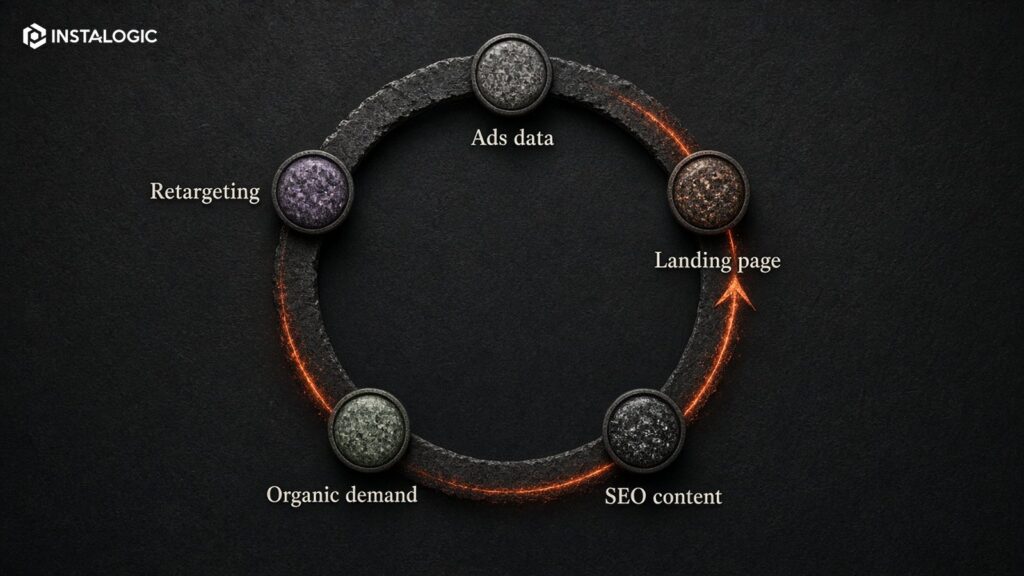
Use Google Ads to learn quickly and SEO to compound what you learn.
Paid search can reveal which queries actually create qualified enquiries, which messages improve conversion and where landing pages fail. SEO can then build durable pages around valuable intent.
SEO can also reduce dependency on media spend over time, while Ads provides coverage for high-priority queries that organic pages do not yet win.
The channels should share data, not operate as separate departments.
A Simple Decision Framework
Ask four questions: How quickly do we need results? How much are we willing to pay to acquire a customer? Does meaningful search demand exist? Is the website ready to convert that demand?
If urgency is high and economics are known, start with Ads. If demand is durable and you can invest in compounding assets, prioritize SEO. If both conditions are true, run a coordinated plan with clear roles for each channel.
Channel choice should therefore be reviewed with finance/sales data, not only with SEO or ad-platform metrics.
Use contribution margin, close rate and customer lifetime value to decide how much you can pay for a qualified lead or sale. A channel is not good because it generates traffic; it is good when the economics and strategic value make sense.
Some businesses have low customer value and expensive search clicks. Google Ads may be commercially difficult even with good campaign management. Others operate in categories where organic competition is dominated by large publishers and aggregators, making SEO a long-term brand investment rather than the fastest acquisition channel.
Do Not Force Both Channels When Economics Do Not Work
The reverse works too. Search Console may reveal long-tail organic queries that convert well but have little paid coverage. Those queries can become ad groups or landing-page tests.
That information can improve the SEO roadmap. The team can prioritize commercial pages around terms that produce real business conversations instead of relying only on keyword volume. It can also identify negative intent that should not be targeted organically as a primary sales page.
Suppose a B2B company is unsure whether buyers search for 'HR software', 'HRMS', 'payroll software' or a more specific problem phrase. A tightly controlled paid-search test can reveal query volume, click behavior, lead quality and the language that resonates in ads and landing pages.
Example: Using Ads to Inform SEO
How to Build a Shared SEO + Ads Search-Intent Map
Create one list of commercially important search themes and classify each by intent, current organic position, paid coverage, landing page, conversion history and business value. This prevents the SEO team from building one keyword universe while the paid team builds another.
Some queries are ideal for both channels. A high-value service term may deserve paid coverage now and a strong organic page for long-term visibility. Other queries may be poor paid targets because clicks are expensive but excellent informational SEO topics. Conversely, a short-lived promotion may belong only in paid media because building evergreen organic content would have little value.
Use paid search-term data to test language and qualification. If a broad phrase produces many clicks but almost no qualified enquiries, do not automatically make it the primary SEO target simply because a tool reports high volume. Search volume shows demand; conversion evidence helps show commercial value.
Review the map quarterly. Organic rankings change, CPCs move, new competitors enter and landing pages improve. A shared intent map makes budget allocation a search strategy decision rather than a competition between two teams.
A Simple Starting Plan
For a new service with no search data, a practical approach is to launch a tightly scoped Google Ads campaign while building the core SEO foundation in parallel. Use the paid campaign to learn which queries, offers and landing-page messages create qualified conversations. Feed those findings into service-page and content priorities.
After several months, review the mix. If organic visibility is growing and paid search remains profitable, both can continue. If paid economics are weak, pause or narrow the campaign rather than treating Ads as mandatory. The strategy should follow evidence, not channel loyalty.
Frequently Asked Questions
Is SEO cheaper than Google Ads?
Not automatically. SEO requires ongoing expertise, content and technical work. Ads requires media spend plus management. Compare cost per qualified outcome over an appropriate time horizon.
Can Google Ads improve SEO rankings?
Buying ads does not directly buy organic rankings. The channels can share useful market and conversion data, but organic ranking systems are separate from advertising.
Should a new business start with SEO or Ads?
If fast demand validation is important, Ads can provide data sooner. At the same time, start essential SEO foundations early so organic visibility can build.