
SEO & AEO
Local SEO vs Traditional SEO: What’s the Difference?
Understand how Local SEO differs from broader SEO, which signals matter, and when a business should prioritize local, national or both.

The Short Answer
Traditional SEO is a broad effort to improve organic search visibility for relevant queries. Local SEO focuses specifically on searches where geography affects the result - for example “dentist near me,” “software company Dhaka” or a service searched from a particular city.
The foundations overlap: useful pages, crawlability, relevance, authority and good user experience. Local SEO adds location-specific signals such as Google Business Profile, local landing pages, reviews, consistent business details and local prominence.
A business can need one or both.
What Traditional SEO Usually Focuses On
Broader SEO often targets topics and commercial intent that are not limited to one physical area. A SaaS company, online service, national e-commerce brand or publisher may want visibility across an entire country or internationally.
The work can include technical SEO, keyword mapping, page architecture, content, internal links, structured data, digital PR and measurement.
Location still matters to personalization, but the strategy is not built around a specific storefront or service area.
What Local SEO Adds
Local SEO deals with the additional question: which businesses are relevant to this person in this place?
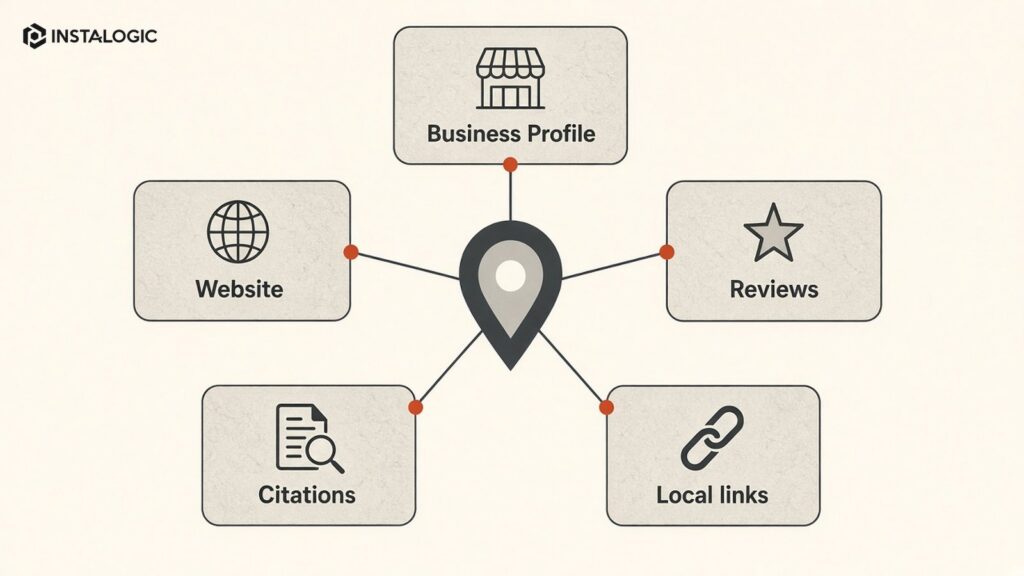
That makes accurate business information important. Google Business Profile, address/service areas, opening hours, categories, reviews, local pages and consistent details across the web all support the local entity.
The website still matters. Local SEO is not a substitute for a useful site with clear service information and strong landing pages.
Local SEO vs Traditional SEO
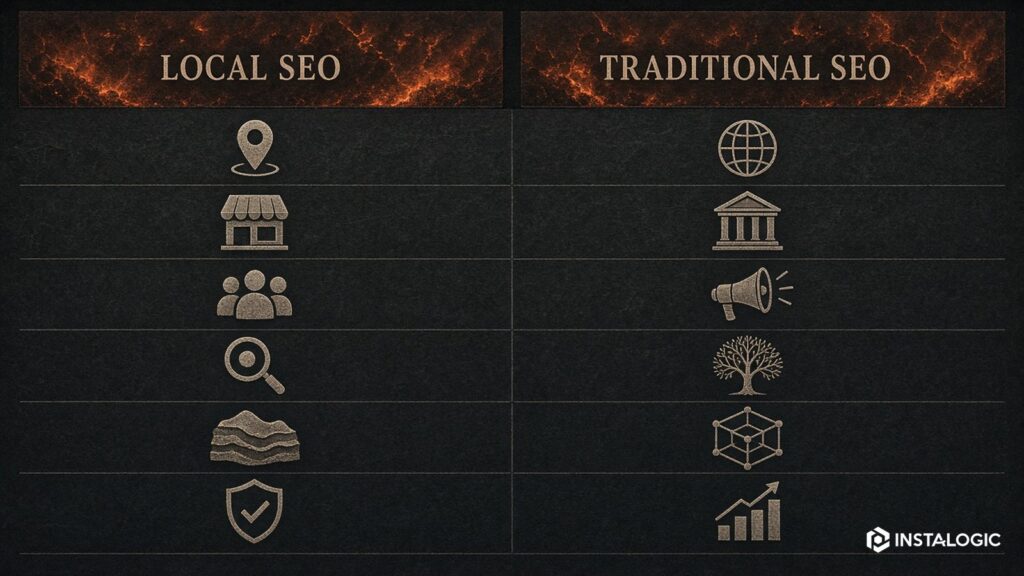
- Target: Local SEO targets customers in specific places; broader SEO can target national or global search intent.
- Search surfaces: Local work often includes Maps/local pack and business profiles in addition to regular organic results.
- Pages: Local businesses may need genuine location/service-area pages; broader SEO may prioritize product, service, topic and comparison pages.
- Reviews: Reviews and reputation are especially important for local decision-making.
- Business data: Name, address, phone, hours and categories require consistent management for local search.
- Authority: Both benefit from authority, but local links, mentions and community relevance can have added value for local businesses.
Who Should Prioritize Local SEO?
Clinics, restaurants, gyms, hotels, real estate firms, home-service companies, local professional services and any business where the customer's physical location influences the purchase.
A business with several branches needs a scalable local architecture: individual location entities, accurate profiles and pages that contain genuinely useful local information.
Do not create dozens of near-identical city pages simply by changing the place name. Thin doorway-style content is a poor user experience and creates duplication.
Who Can Focus More on Broader SEO?
Software companies, online platforms, publishers, export businesses and nationwide services may get more value from broader topic and commercial-intent SEO.
That does not mean they should ignore location. A company may still maintain a strong headquarters/business profile and dedicated market pages. The difference is that location is not the primary filter for most customer searches.
When You Need Both
A multi-location healthcare provider may need local visibility for clinics and broader educational content that earns national search traffic. A real estate company may need neighborhood/location pages plus market guides. A digital agency may target country-level commercial searches while publishing non-location educational content.
Build separate page roles so the local and broad strategies support each other instead of competing for the same keyword.
How to Measure Local SEO
Track more than rankings. Monitor Google Business Profile interactions, calls, direction requests, website visits, local landing-page conversions and visibility by location.
For broader SEO, track non-branded clicks/impressions, priority landing pages, conversions and topic visibility.
Use the same business outcome where possible, but recognize that local discovery may happen partly inside Maps and business profiles rather than only on the website.
Measure calls, form submissions, bookings, directions and qualified enquiries by location. This prevents the team from optimizing a map rank that does not translate into business.
Check whether the phone number works, the site loads well on mobile, the service is clear, the business has trustworthy reviews, and the next step is obvious. For appointment businesses, booking friction matters. For restaurants/hospitality, current hours and location information matter.
Ranking in Maps is not the final objective. The profile and landing page still need to convert.
Local SEO and Conversion Are Connected
Link local pages from logical navigation or location finders. Do not orphan them and expect search engines to discover a hidden list in the sitemap.
Service-area companies need more judgement. If a plumbing company genuinely serves several cities, location/service-area pages can be useful when each page reflects real coverage, examples and local information. Copying the same 600 words and changing the city name creates little value.
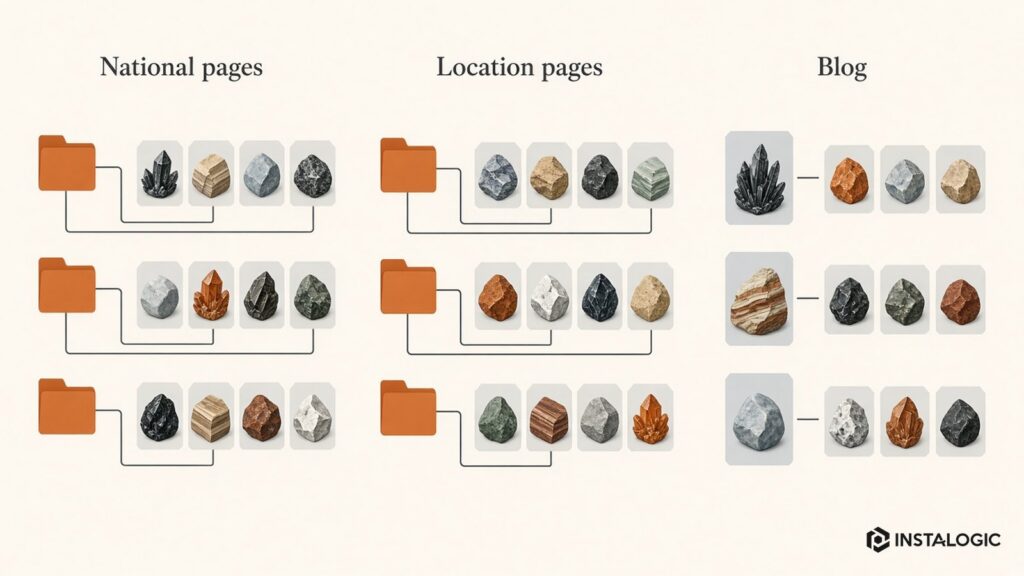
A single-location business may need a strong homepage, service pages and one clear location entity rather than dozens of city pages. A multi-location business should usually give each real branch a dedicated page containing address, contact information, hours, services, staff or local details, directions and relevant proof.
Local SEO Page Architecture
A Local SEO Audit You Can Run in One Hour
Start by searching the business name and checking whether the correct website, profile and contact information are easy to find. Then open the Google Business Profile and verify name, primary category, additional categories, address or service area, hours, phone, website and services. Note duplicates, outdated listings and missing information.
Next, review the website. Can a visitor quickly confirm where the business operates and what it offers? Is there a genuine location page for each real branch? Are phone numbers and addresses consistent? Test the site on mobile because many local searches happen close to the point of action.
Review recent reviews and responses. Look for recurring language customers use to describe the service, but do not rewrite profiles merely to stuff those terms. Check whether review requests happen consistently or only during occasional campaigns.
Finally, search several important service terms from realistic locations or use a local rank-tracking grid. Record where visibility is strong or weak. This one-hour audit will not replace deeper Local SEO work, but it usually exposes whether the biggest problem is profile accuracy, website relevance, reviews, geographic reach or local authority.
Do Not Separate Local SEO From Reputation
For many local businesses, search visibility and reputation are inseparable. A high Maps position with weak reviews can still lose the customer, while a well-reviewed business that is invisible for relevant searches misses demand. Treat profile accuracy, reviews, website experience and local visibility as one customer-acquisition system.
Operational teams matter here. Marketing can ask for reviews, but service quality determines what customers write. Local SEO therefore works best when marketing, customer service and location managers share responsibility for the public business entity.
Frequently Asked Questions
Is Local SEO separate from SEO?
It is a specialized part of SEO. The fundamentals overlap, but local search adds business-profile, review, location and Maps-specific work.
Do I need location pages for every city?
Only when the business genuinely serves those markets and can provide useful, distinct information. Do not mass-produce thin pages by swapping city names.
Can an online-only business benefit from Local SEO?
Usually broader SEO is more important unless the business has a meaningful physical or service-area presence.