
GEO & AI Search
How Can a Business Get Found in ChatGPT, Gemini and AI Search?
A practical AI-search visibility checklist covering crawl access, SEO, source content, entity clarity, evidence, images, freshness and AI citation measurement.

There Is No “Submit to AI and Rank” Button
Businesses want a simple answer: add a file, install schema, submit the site and appear in ChatGPT or Gemini.
Current official guidance does not support that idea.
Google says AI Overviews and AI Mode use the same fundamental Search eligibility and SEO foundations. OpenAI says public websites can appear in ChatGPT search and recommends allowing OAI-SearchBot if you want content to be discovered. Bing provides Webmaster Tools reporting for AI citations.
So the practical strategy is source visibility, not an AI-ranking hack.
1. Make Sure the Website Can Be Crawled and Indexed
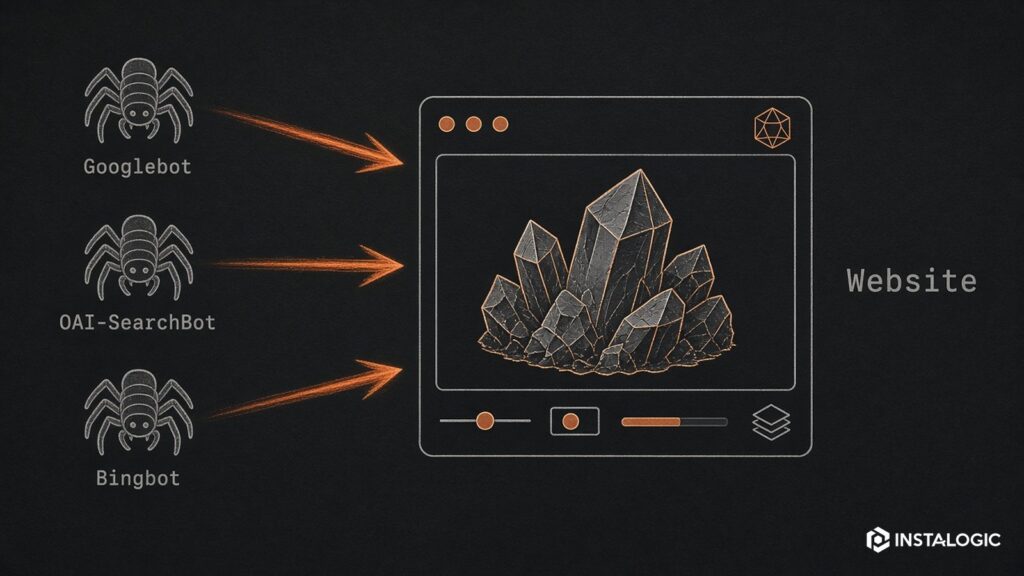
Check robots.txt, noindex rules, CDN/firewall bot protection and canonical configuration.
For Google AI features, pages must be indexed and eligible to appear with a snippet in Google Search.
For ChatGPT search, OpenAI recommends not blocking OAI-SearchBot when you want content to be discoverable and cited.
Do not blindly allow every crawler; make an intentional policy. But a site that blocks the systems it wants visibility from is starting with a preventable disadvantage.
2. Build Pages Around Real Entities
Make the company easy to identify.
Use a consistent company name, logo, address/contact information where relevant, service descriptions and About page. For products, use consistent product names, features and ownership. For authors, provide real expertise and bios when it adds trust.
Conflicting facts across the website create ambiguity. AI systems need to resolve entities before they can confidently synthesize information.
3. Publish Information Worth Citing
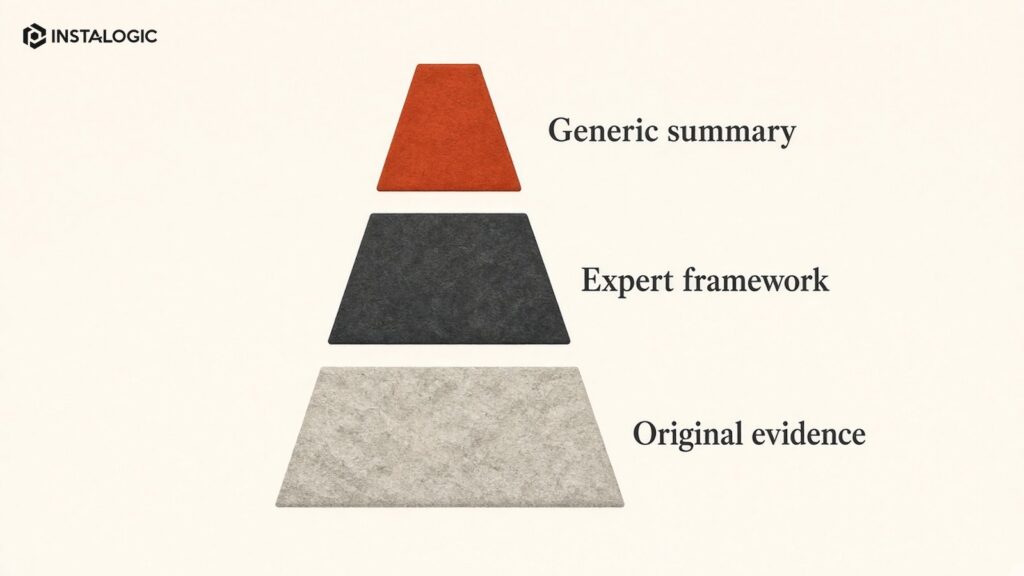
Generic summaries are interchangeable.
Create source value: original research, pricing methodology, implementation experience, checklists, benchmarks, case studies, screenshots, comparison frameworks and expert explanations.
For example, “What is SEO?” is available everywhere. “What we found after auditing 50 Bangladesh service-company websites” would be more distinctive if the research were real and transparent.
Citation potential starts with having something worth citing.
4. Answer Questions Clearly
Use direct definitions and concise answers near relevant headings.
A page should make sense when a paragraph is read outside the surrounding marketing copy. Define acronyms, dates, markets and assumptions.
This helps users first. It also makes passages easier for retrieval systems to understand.
5. Support Claims With Evidence
Link to primary sources for platform policies, laws, research and current product facts.
Separate your own experience from general fact. If a number comes from an internal client project, explain the context and get permission before publishing it.
Trustworthy source behavior is useful for both conventional search and AI systems.
6. Keep Time-Sensitive Information Fresh
Pricing, tool features, regulations and statistics change.
Add update dates when they are meaningful, then actually review the page. Do not change a date automatically while leaving outdated content untouched.
Bing explicitly emphasizes freshness for AI-answer inclusion and supports IndexNow for faster discovery of updates.
7. Use Strong Visual Content
Google now provides reporting for multimodal search experiences, including image-driven discovery.
Use original diagrams, screenshots, charts and product visuals with descriptive surrounding text. Important facts should still exist in crawlable text rather than only inside an image.
Visuals can make a source more useful and more discoverable without becoming decorative clutter.
8. Strengthen Your Brand Beyond Your Own Website
AI systems may use information from many sources.
Earn legitimate mentions in industry publications, directories, associations, podcasts, review platforms and partner ecosystems. Keep core facts consistent.
This is not about spamming citations across the web. It is about creating an entity footprint that reflects the real organization.
9. Measure AI Visibility Separately
Google introduced dedicated generative-AI performance reporting in Search Console in 2026. Bing Webmaster Tools reports AI citations and related insights. Track referral traffic from AI platforms where analytics exposes it.
Manual prompt monitoring can supplement those sources, but treat it as directional. Responses vary by wording, user context, time and model.
Measure trends, cited pages and business outcomes rather than celebrating one screenshot.
A 90-Day AI Search Visibility Plan
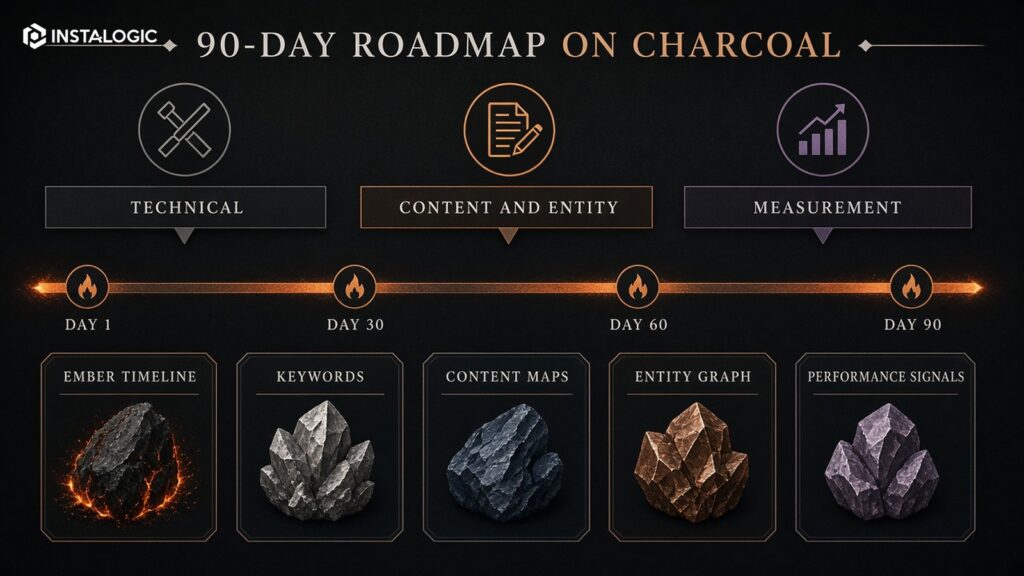
Month 1: technical access, indexing, entity cleanup and measurement.
Month 2: improve the highest-value service/product pages and publish two or three strong source assets around important buyer questions.
Month 3: strengthen internal links, update key external profiles, promote the source assets, review Google/Bing AI visibility and improve pages being retrieved but not converting.
Do not create a separate “GEO content calendar” with no connection to the business. Start where search visibility and buyer intent already matter.
Do not overclaim causation. AI visibility is an emerging discovery layer, and measurement should acknowledge the gaps.
Track AI referrals where available, but also monitor branded search demand, direct traffic, assisted conversions, citation frequency and sales feedback about how prospects discovered you.
A user may see your company cited in an AI answer and later search the brand directly, visit through another channel or never click at all. That makes attribution imperfect.
AI Referral Traffic Is Only One Outcome
Build the asset that best answers the question instead of forcing every topic into a 1,500-word blog format.
Think about what a model would need to answer a buyer's question accurately. If the question is 'Which agency is best for X?', a transparent comparison methodology is useful. If the question is 'How much does service Y cost?', a current pricing framework with assumptions is useful. If the question is 'Does this product integrate with Z?', clear technical documentation is useful.
Some of the strongest AI-search assets may not be conventional articles. A detailed pricing methodology, benchmark page, original research report, public documentation, integration guide, comparison table or case study can become a highly useful source.
Create Source Pages, Not Just Blog Posts
A Practical AI Visibility Measurement Dashboard
Create separate sections for traditional search, AI citations and business outcomes. Traditional search can include Search Console impressions, clicks and priority landing pages. AI visibility can include Bing citation counts and cited pages, Google generative-AI reporting where available, manual tracked prompts and referral traffic from identifiable AI sources.
Add entity-level observations. Which brand/service topics are cited? Which competitor sources appear repeatedly? Which of your pages are retrieved, and are they current commercial pages, blog articles, documentation or third-party profiles? That information can guide content improvement better than a single visibility score.
Keep manual prompt tracking controlled. Use a fixed set of buyer questions and record date, platform, prompt and whether the brand/source appeared. Do not treat one result as stable because answers can vary by user, model and time.
Finally, connect visibility to business signals: branded search, direct traffic, assisted conversions, sales discovery notes and qualified leads where possible. AI discovery may influence a buyer without producing a clean referral, so the dashboard should show evidence without pretending attribution is perfect.
What Not to Do
Do not create hundreds of near-identical pages for every possible AI prompt. Do not hide keyword lists in schema or publish unsupported facts because they sound authoritative. Do not block normal search crawlers while expecting strong AI discovery.
Most importantly, do not measure success by screenshots of a single prompt. Build durable source assets, maintain technical access and evaluate trends across multiple discovery systems and business outcomes.
Frequently Asked Questions
Can any public website appear in ChatGPT search?
OpenAI says any public website can appear in ChatGPT search. Allowing OAI-SearchBot helps content be discovered and cited, but inclusion is not guaranteed.
How do I optimize for Gemini?
For Google's AI search experiences, Google says core SEO remains foundational and there are no special AI-specific technical requirements beyond normal Search eligibility.
How can I track whether AI is citing my website?
Use available Google Search Console generative-AI reporting, Bing Webmaster Tools AI Performance, analytics referral data and carefully designed manual monitoring.
Should I create AI-only content pages?
Usually no. Create strong pages for real buyer/search intent, then make them clear, evidence-based and source-worthy for both people and retrieval systems.