
Digital Marketing
Digital Marketing Cost in Bangladesh: Services, Pricing and What You Actually Need
A practical 2026 guide to digital marketing cost in Bangladesh: agency fees, ad spend, SEO, social, content, websites, analytics and what changes the price.

The Short Answer
Digital marketing cost in Bangladesh varies because “digital marketing” can mean a single channel or an entire growth team. Current public agency pages show entry-level retainers in the tens of thousands of BDT per month and broader performance programs well above BDT 100,000 per month. Ngital, for example, publicly lists a starter range of BDT 50,000-90,000 per month and a higher performance-marketing range beginning above that; other local providers publish lower packages with narrower scope.
That spread is normal. A company buying basic social media posting is not buying the same thing as a company hiring a team for SEO, Google Ads, Meta Ads, creative production, landing pages, analytics and CRM automation.
The useful question is not “What does digital marketing cost?” It is “What work do we need, how much capacity does it require, and which costs go to the agency versus the media platforms?”
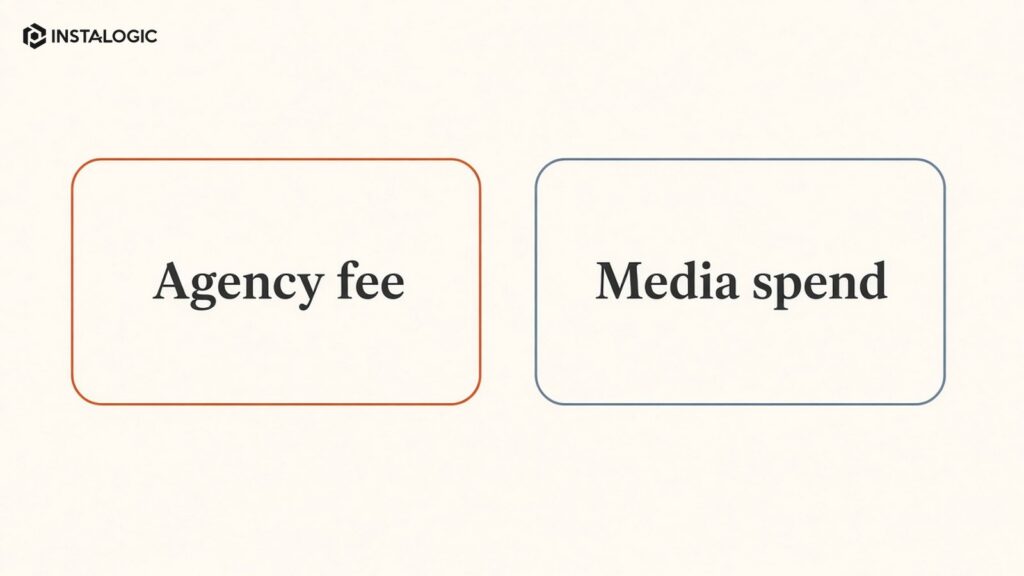
Separate Agency Fees From Media Spend
Paid advertising has at least two separate costs. The first is the media spend paid to Google, Meta, LinkedIn or another platform. The second is the fee for strategy, campaign setup, management, creative, reporting and optimization.
If an agency quotes BDT 50,000 per month, ask whether that number includes ad spend. In most professional arrangements, media spend is separate because the client controls how much budget is placed into the platform.
The same separation applies to third-party software, photography/video production, premium tools, hosting and development work. A clean proposal should show those items clearly.
Typical Cost Components
- SEO: Technical work, keyword/search-intent mapping, commercial-page optimization, content, internal linking, local SEO, authority work and reporting.
- Paid media: Account setup, campaign structure, targeting, creative, landing pages, conversion tracking and ongoing optimization. Media spend is usually separate.
- Social media: Content strategy, calendar, copy, design/video, publishing, community management and possibly paid promotion.
- Content marketing: Research, editorial planning, writing, design, distribution and updating existing content.
- Website / landing pages: New pages, redesigns, development, tracking and conversion work can be project fees or part of a larger retainer.
- Analytics: GA4, GTM, dashboards, CRM source tracking and conversion definitions.
- Automation: Email/CRM workflows, lead routing, integrations and ongoing maintenance.
Why One Agency Can Be 5x More Expensive Than Another
Team structure is a major reason. A freelancer may be one person doing strategy, copy, ads and reporting. A larger agency may assign a strategist, account lead, media buyer, SEO specialist, designer, writer, developer and analyst.
Neither model is automatically better. A focused freelancer may outperform a large agency on a narrow task. A multidisciplinary team becomes more valuable when several systems have to work together.
Pricing also reflects creative volume, reporting depth, response time, industry complexity and how much senior attention the account receives.
What Should a Small Business Buy First?
Do not begin with a bundle simply because it includes more channels.
If customers already search for your service, start with search visibility and conversion: SEO, Local SEO or Google Ads depending on urgency and economics. If demand is created visually, paid social and strong creative may matter more. If leads arrive but disappear, fix CRM and follow-up before increasing traffic.
For many small businesses, one or two well-run channels plus a good website outperform six underfunded channels.

A Practical Budgeting Model
Divide the budget into four buckets: acquisition, content/creative, conversion infrastructure and measurement.
Acquisition covers paid media, SEO and distribution. Content/creative covers articles, ad creative, design and video. Conversion infrastructure includes landing pages, website work and CRM. Measurement includes analytics and reporting.
Not every month will use the same mix. A launch month may spend more on setup and pages. Later months may shift toward optimization and content.

What to Ask Before Accepting a Package
- Which channels are included, and why do you recommend them?
- Is ad spend included or separate?
- How many creative assets or content pieces are included?
- Are landing pages and development included?
- Who owns the ad accounts, analytics and creative files?
- What counts as an extra charge?
- What will be measured every month?
- How often will strategy be reviewed?
The Cost of Buying the Wrong Work
A low fee can be expensive if it keeps the team busy on low-impact activity. A high fee can also be wasteful if the scope is larger than the business can use.
The objective is to fund the bottleneck. If tracking is broken, fix tracking. If the website does not convert, improve conversion. If the business is invisible for high-intent searches, invest in search. If follow-up is slow, automate it.
That is why Instalogic's preferred starting point is an audit: understand where growth is being lost before deciding which services belong in the monthly plan.
The monthly review should therefore include a capacity question: if marketing works better next month, can the business absorb the result?
Reduce or reallocate budget when the campaign is optimizing toward weak conversions, the website cannot support demand, creative fatigue is severe or the team cannot follow up with leads quickly enough. Budget discipline is part of marketing strategy.
Increase budget when the team has reliable tracking, a channel is producing qualified outcomes at acceptable economics, and the sales/operations team can handle additional demand. Scaling before those conditions exist can magnify waste.
When to Increase - or Reduce - the Marketing Budget
When comparing agencies, normalize the media spend, production volume, strategist time and technical work. Ask for an option that starts smaller and expands only when data justifies it. A phased scope can protect cash flow while still building the systems needed for growth.
Those examples show why package names are misleading. Two businesses can both buy 'digital marketing' while funding completely different teams. Build the budget around the customer journey and the bottleneck rather than around a prebuilt menu.
A small professional-service company may not need a full-service retainer. It might benefit more from Local SEO, one paid-search campaign, basic creative and better lead tracking. A growing e-commerce brand may need paid media, creative testing, email automation and website/CRO work. A B2B software company may spend more on SEO, content, LinkedIn, landing pages and CRM automation than on daily social posting.
Example Budget Scenarios
How to Decide What Percentage of Revenue to Spend on Marketing
There is no universal percentage that works across industries and growth stages. A venture-backed SaaS company pursuing rapid expansion may invest far more aggressively than a mature professional-service firm with strong referrals. A retailer with repeat purchases can tolerate a different acquisition cost from a business that makes one low-margin sale per customer.
Start with unit economics rather than a benchmark. Estimate gross margin, average customer value, close rate and the maximum acceptable cost to acquire a customer. Then work backward to the qualified-lead or transaction level. This creates a ceiling for paid acquisition and helps judge whether SEO, content and brand investment can improve the mix over time.
Separate maintenance from growth. Some spending protects existing demand: keeping the website healthy, retaining branded search coverage, maintaining CRM/data quality and communicating with current customers. Other spending is explicitly for expansion: new markets, new paid campaigns, new content clusters or a website conversion program. Both matter, but management should know which budget is doing which job.
Review the model quarterly. If a channel becomes more efficient, the right move may be to invest more rather than celebrate a lower cost and leave budget unused. If the sales team is at capacity, the right move may be to improve lead quality or retention instead of buying more demand.
Keep a Reserve for Testing
Do not allocate every taka to fixed monthly production. Keep some capacity for experiments: a new landing page, a creative angle, a campaign test or an analytics fix discovered after launch. A marketing plan should be stable enough to execute but flexible enough to respond to evidence.
For smaller budgets, that reserve may be time rather than extra cash: agree that a portion of the monthly scope can shift between channels when the data justifies it. The important point is to avoid a plan where every deliverable is locked before the team learns anything.
Frequently Asked Questions
How much does a digital marketing agency charge in Bangladesh?
Public 2026 pricing varies widely. The fee depends on channels, creative volume, seniority, reporting, technical work and whether the engagement is single-channel or full-service.
Does digital marketing pricing include ad spend?
Often no. Google/Meta media spend is commonly paid separately from the agency management fee. Confirm this in every proposal.
Is a monthly package better than project pricing?
Ongoing campaigns, SEO and content often fit a retainer. Audits, websites, tracking setup and defined automation projects can work well as project-based scopes.